BENEATH THE STREET: SUBTERRANEAN DIALOGUES 1.10 July ~ 5 August 2026.
BENEATH THE STREET: SUBTERRANEAN DIALOGUES 2.8 August ~ 30 September 2026.
Curated by Peter Burke.
Beneath The Street: Subterranean Dialogues 1 & 2 explore what exists beneath the visible — hidden systems, ecologies, networks, histories and tensions that shape everyday experience. Beneath the Street isn’t a literal interpretation of what lies below the street. It explores what exists beneath and between—moving off the beaten track, stepping backwards and forwards in time, and scratching below the surface.
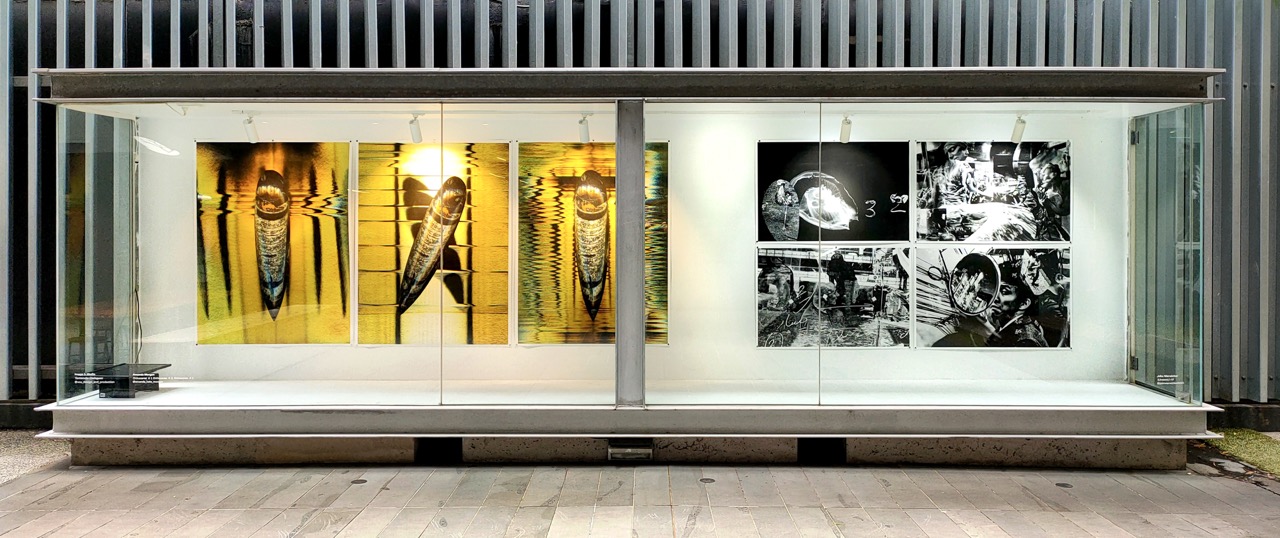
Assembly Point
24/7 152 Sturt St, Southbank.
Supported by Creative Spaces, City of Melbourne, and Victoria College of the Arts, University of Melbourne.
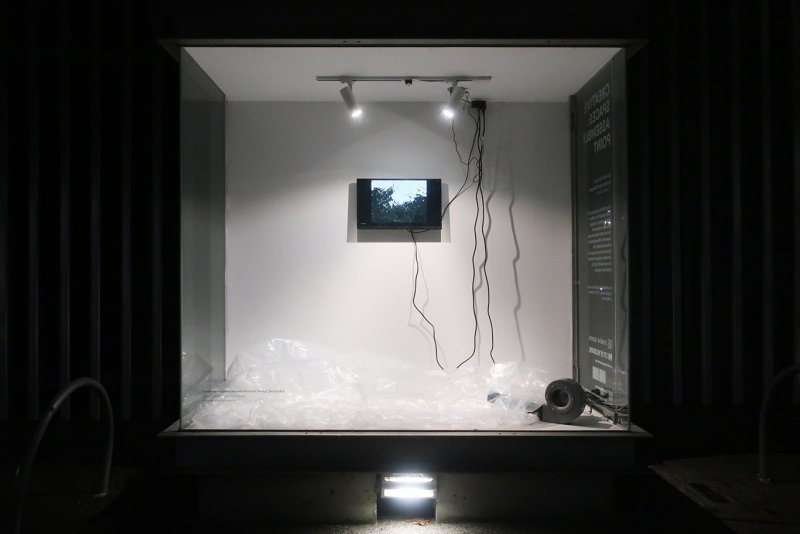
1. Karen ann Donnachie & Andrea (Andy) Simionato
deepSigh site-specific installation, 2026. Industrial blower, plastic bag, electronic components, digital camera, LCD screen, 2m × 1.8m × 1m.
Donnachie and Simionato introduce their new generalised-automated-art-system (GAAS) called deepSigh. Throughout the duration of this exhibition, deepSigh will use an industrial blower and a plastic bag as a randomising engine as it attempts to plot unique (non-computationally predictable) orbital drawings. The artwork is completely sealed from the world outside of its glass-case (sometimes referred to as being 'air-gapped') and does not make reference to any external data during the exhibition. deepSigh is the result of combining a number of custom-trained LLMs (Large Language Models) and other bespoke software created and used by Donnachie and Simionato during a decade of experimenting with computational unknowingness*, which they do not perceive as an absence, but an openness from which new meanings, and feelings, may appear. As with many works hosted by the CCU, 'unknowing', here, is defined as a productive suspension that allows pre-symbolic sense to emerge, with language and meaning arriving only after perception has already taken shape.
 SEEN_PhotoJohnWarwicker Large.jpeg)
2. John Warwicker
(Un) SEEN I–IV 2026. Digital collage on Epson archival paper. 80 × 110 cm.
A selection of images from a larger series of digital collages by John Warwicker.
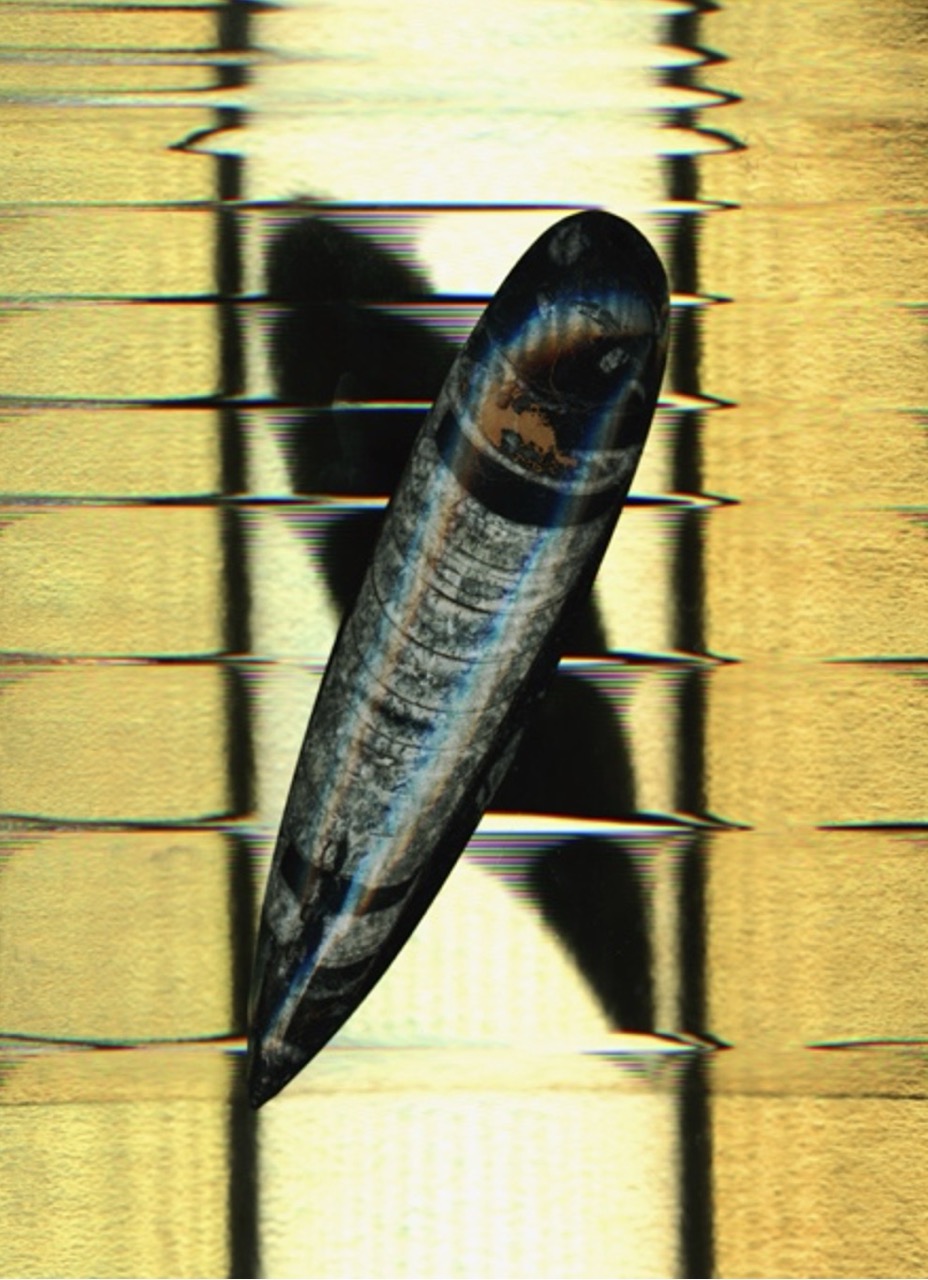
3. Amanda Kate Morgan
Orthoceras #1, Orthoceras #2, Orthoceras #3 2026. Large format archival pigment inkjet prints on Hahnemühle Smooth Photo Rag, 110 × 150 cm each. Edition of 5.
'...To be we need to know the river holds the salmon and the ocean holds the whales as lightly as the body holds the soul in the present tense, in the present tense.' -Excerpt from Ursula K. Le Guin, Infinitive, 1999. Observations of cephalopod intelligence propose a form of image-making grounded in care, listening, intimacy, and reciprocity. A scanned image and encounter become a speculative act of multispecies co-creation. The glitched yellow and black photographs of the 375-million-year-old fossil squid position the Orthoceras fossil within the contemporary ecological crisis. The scanned images, relics of digital obsolescence, meet the ocean's ancient technologies of touch. Humans need reminding that they're part of the ecosystem with origins in the ocean. In the photographs, the tactile and the technological intertwine. Through these careful encounters, the photographs perform a tentacular idea of entanglement with a cephalopodic way of thinking and feeling.
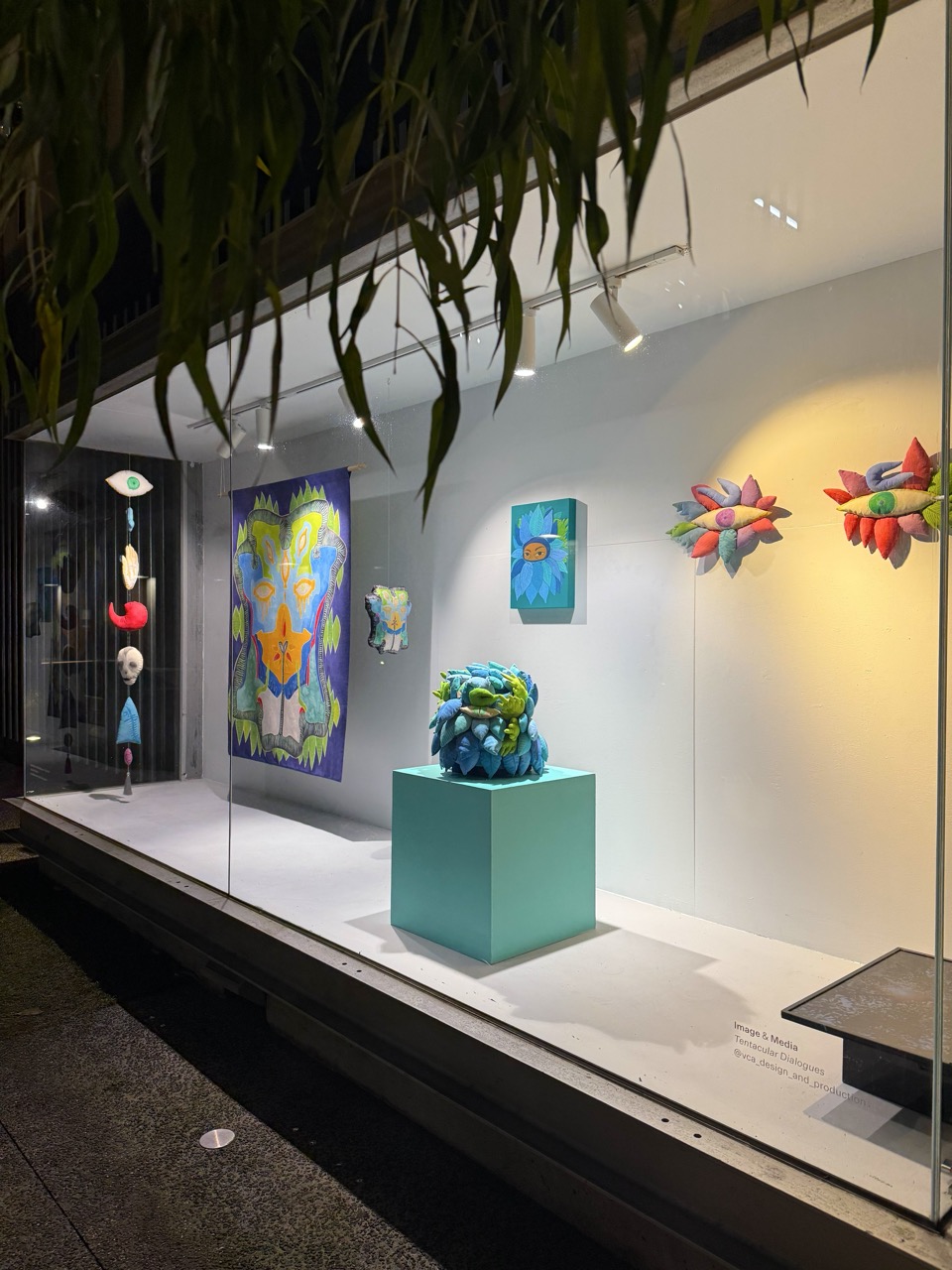
4. Kate Beynon, Rali Beynon /TUDO FAM
Amulets & Spirits Installation comprising textile print on canvas, bamboo, metallic thread, watercolour/acrylic on cotton amulets and textile-covered motorcycle helmet, acrylic on wood, textile print on cotton plushie doll, 2026. Various dimensions. Courtesy the artists and Sutton Gallery.
Installation comprising textile print on canvas, bamboo, metallic thread, watercolour/acrylic on cotton amulets and textile-covered motorcycle helmet, acrylic on wood, textile print on cotton plushie doll.
5. David McBurney
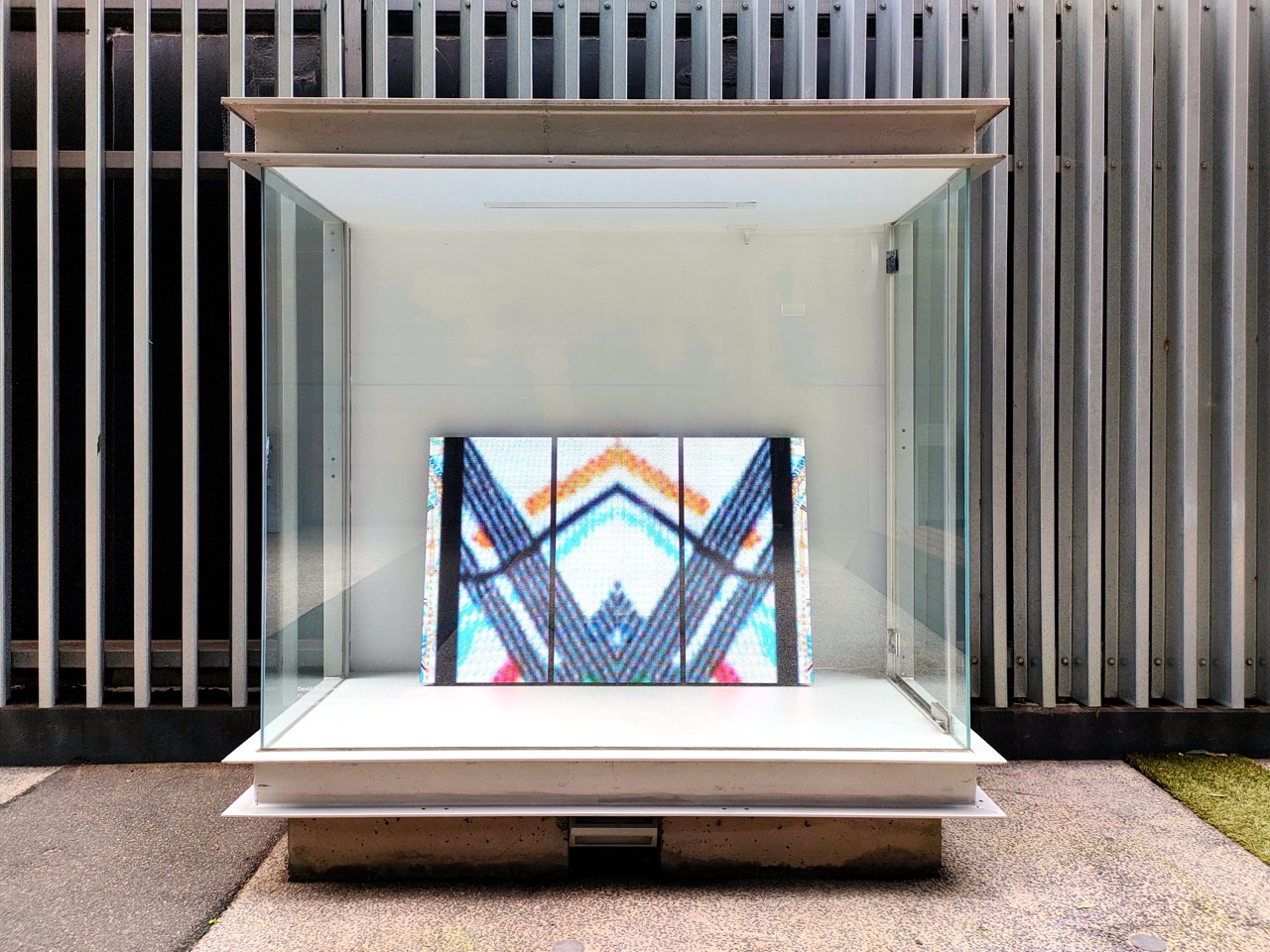
Five relocations of Sturt Street from Melway edition 50 2026. Moving image on split LED panels, 100 × 152 × 8 cm.
This work re-presents Melway scans of 'Sturt St' as visibly individual data points, scrolling and reflecting across a triptych of lo-resolution LED screens. Part of a larger investigation into the visible relocation of images, this work explores how contemporary information has recently evolved to become mechanically boundless and difficult to perceive. In an age where digital images are seamlessly relocated, McBurney's research explores how visible process of reproduction can help preserve generational movements of information across time and place.
6. Peter Burke
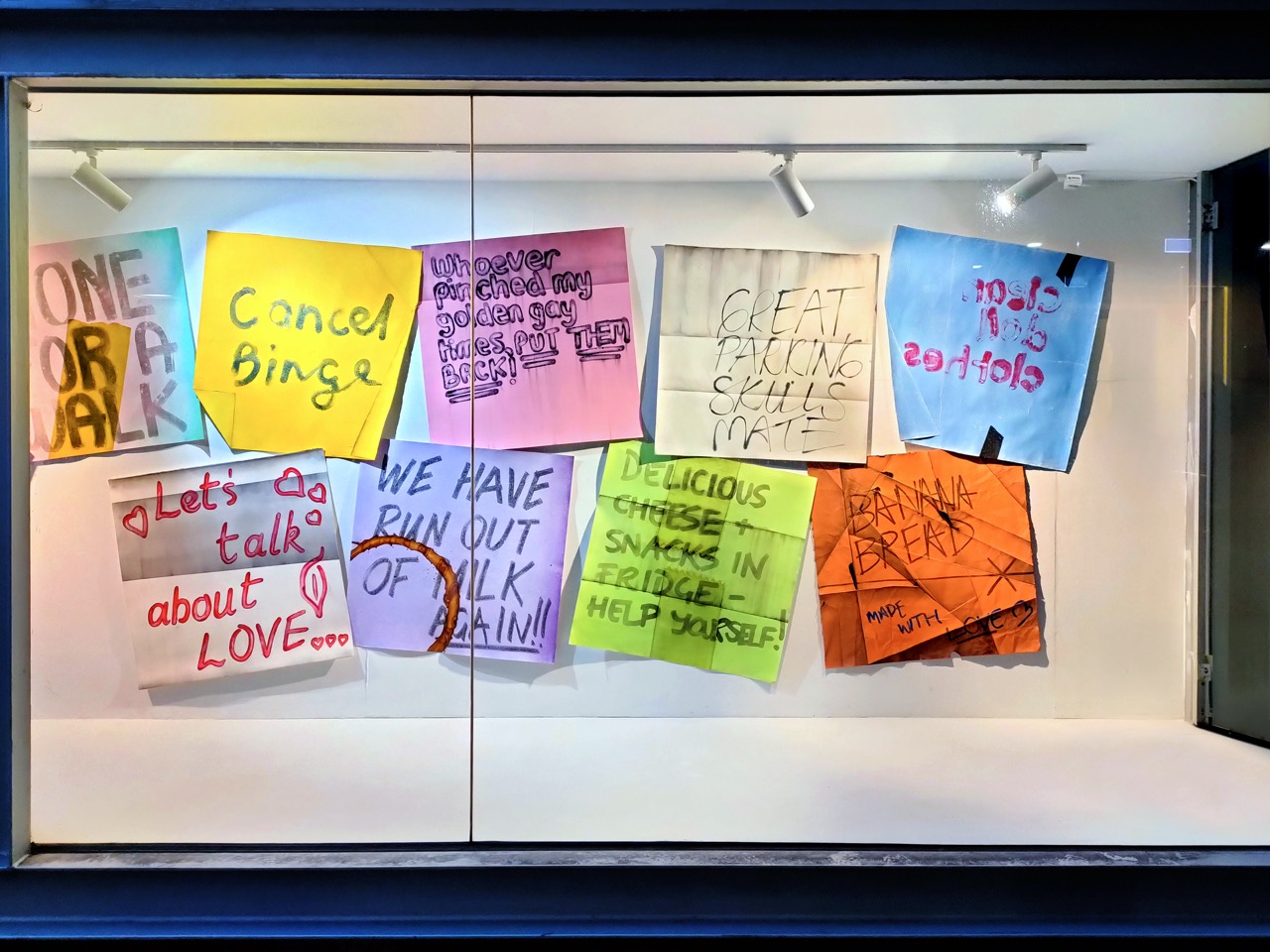
Street Notes 2026. Mixed media on paper. Dimensions variable. Each drawing 76 × 76 cm.
Over the past few years, I've been creating facsimiles of handwritten notes I've found in public spaces around my neighbourhood, such as streets and car parks. I'm drawn to their incomplete narratives, as well as the unique handwriting and wear on the paper. By replicating them as drawings, I transform these ephemeral items into artworks that invite deeper scrutiny and interpretation. These notes offer insights into the human condition, revealing stories that are often passed by in the rush of daily life.
7. Willow Berzin
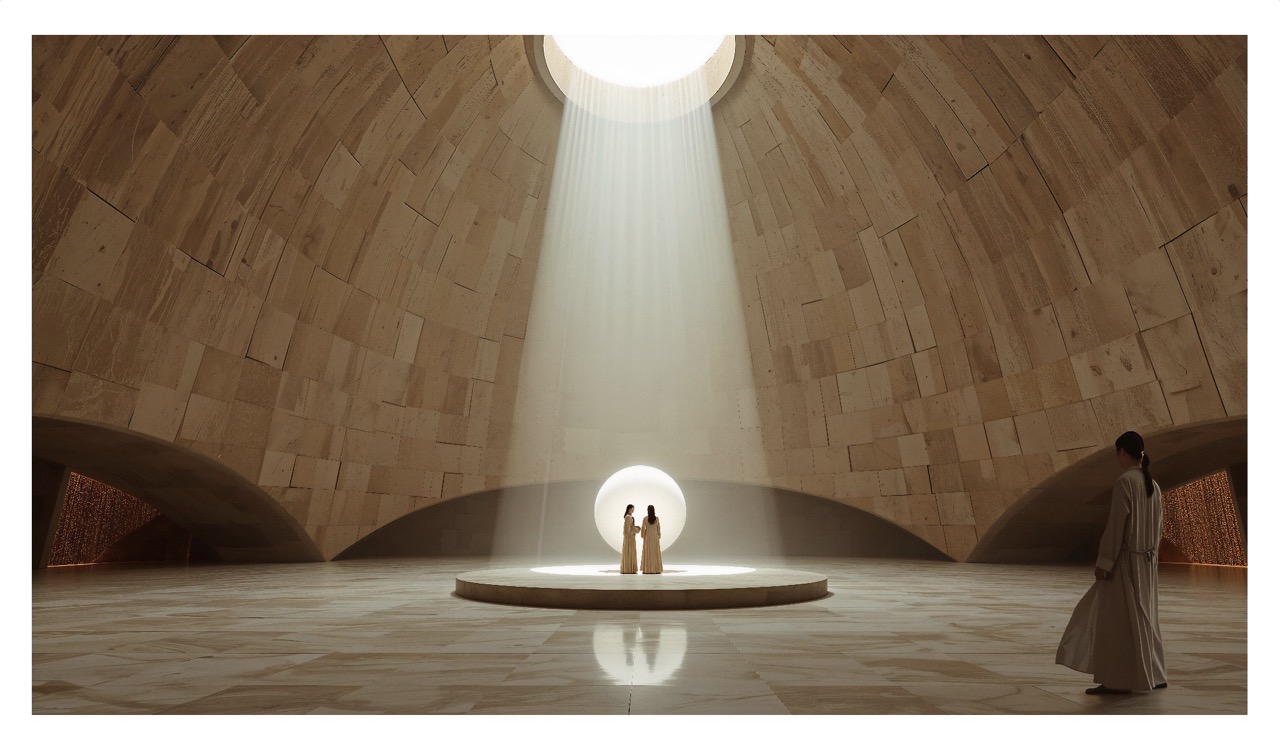
Nautilus + 3xTL 2026. Archival pigment inkjet print on Hahnemühle Smooth Photo Rag. 62 × 103 cm.
Willow Berzin’s work imagines Nautilus, a wellbeing intelligence interface, as a physical space. The image asks: if we could walk into the future now, what would it be like?
8. Emile Zile
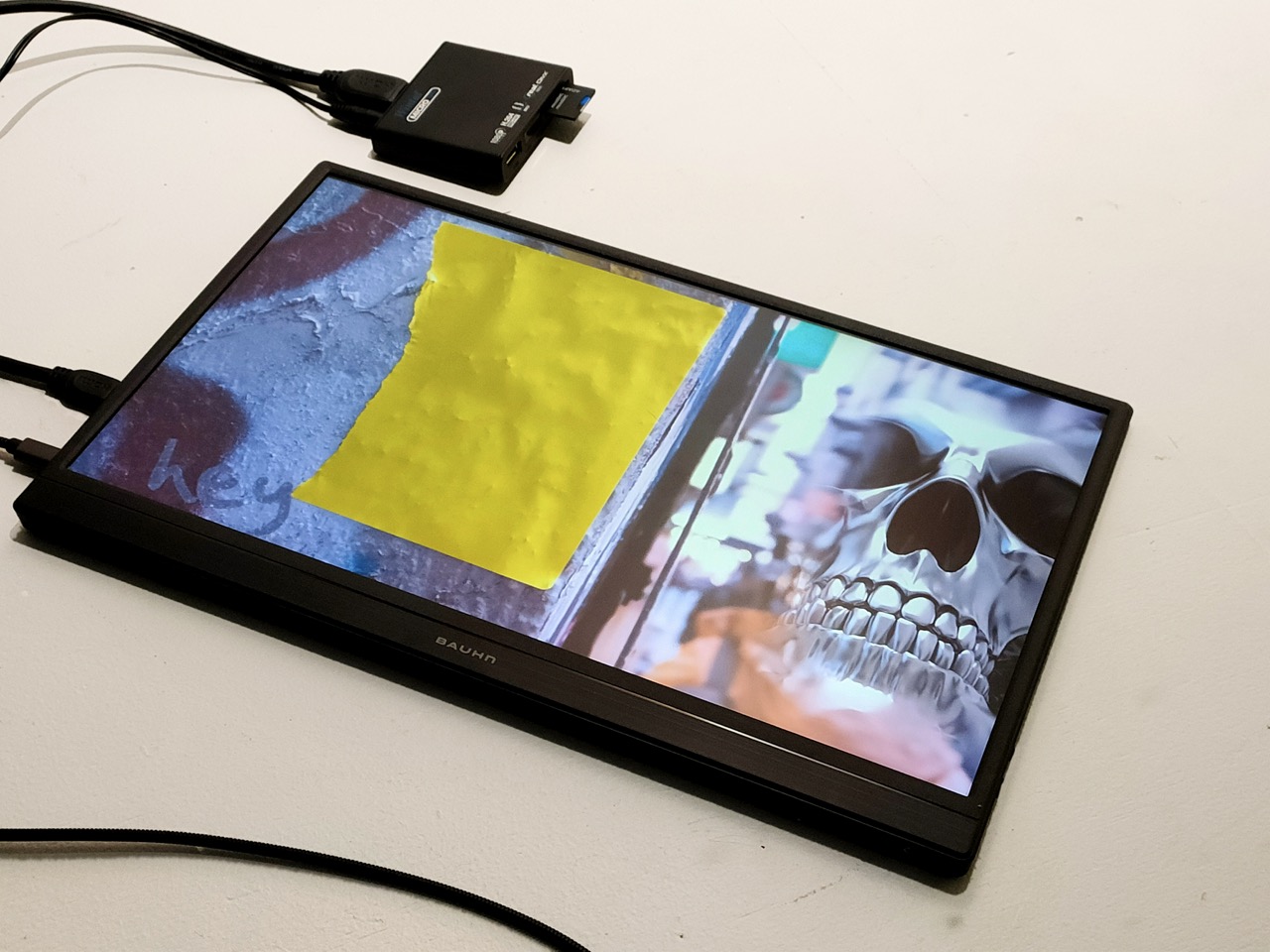
Hello Fresh 2026. Digital video, dimensions variable.
Fluoro yellow, Delivery bags, Safety Cultures, Street Aesthetics, 3D objects, Authorless Urban Markmaking.
9. Anna Hoyle
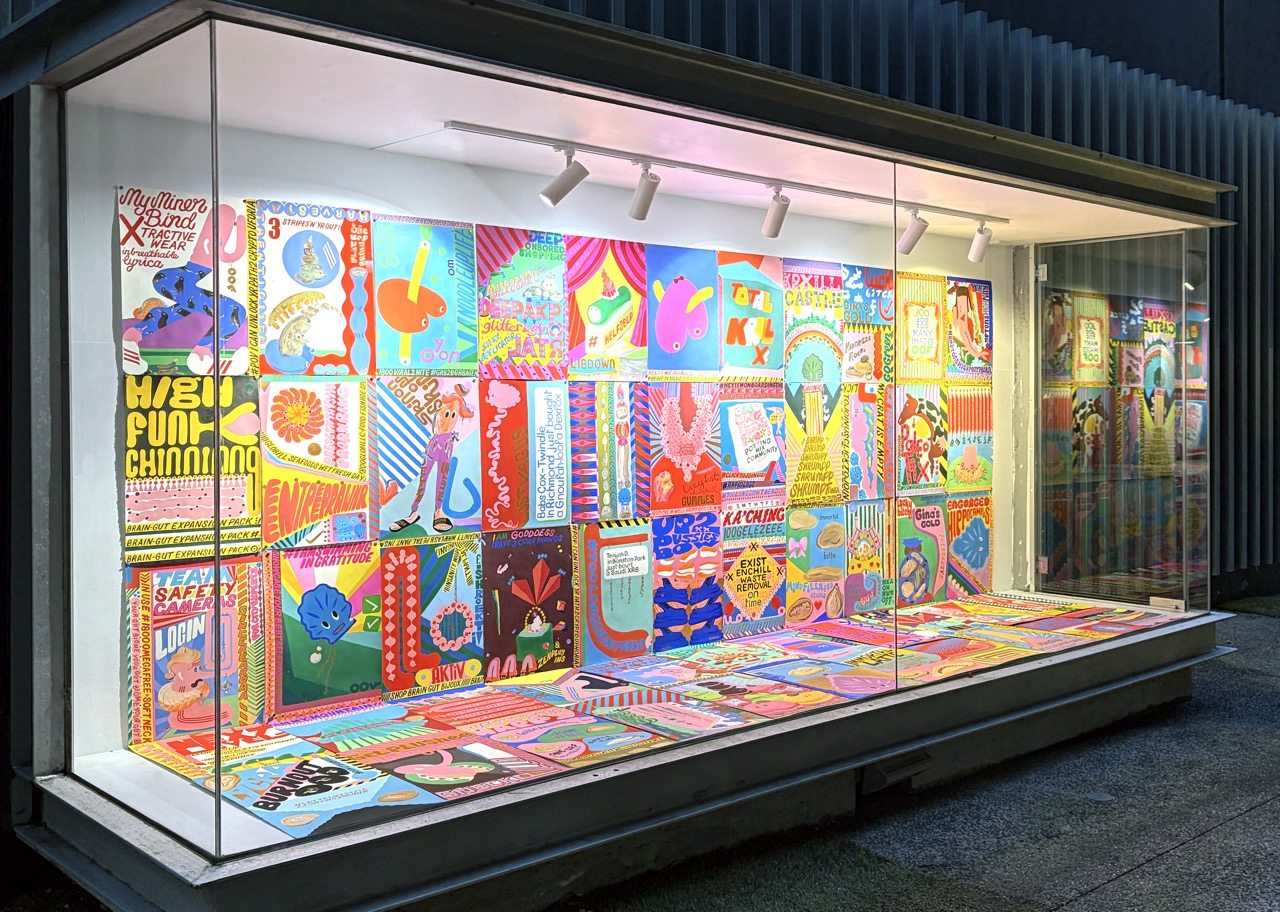
high functioning functional dysfunction 2022-26. Gouache on paper panels, dimensions variable.
I love subversive humour and use art to help people reflect on the joys and anxieties of contemporary consumerism. My words and phrases are inspired by junk mail, gadgets, self–help, wellness and greenwash, or often drawn from scrolling and collecting socially mediated language. Obviously, I just love painting text and colour and working in a large format with overload of saturated content!!! .. My work is humorous and playful but also fiddles with the tragic comic side of our socially mediated consumer culture and commodified behaviours.
10. Kieran Boland
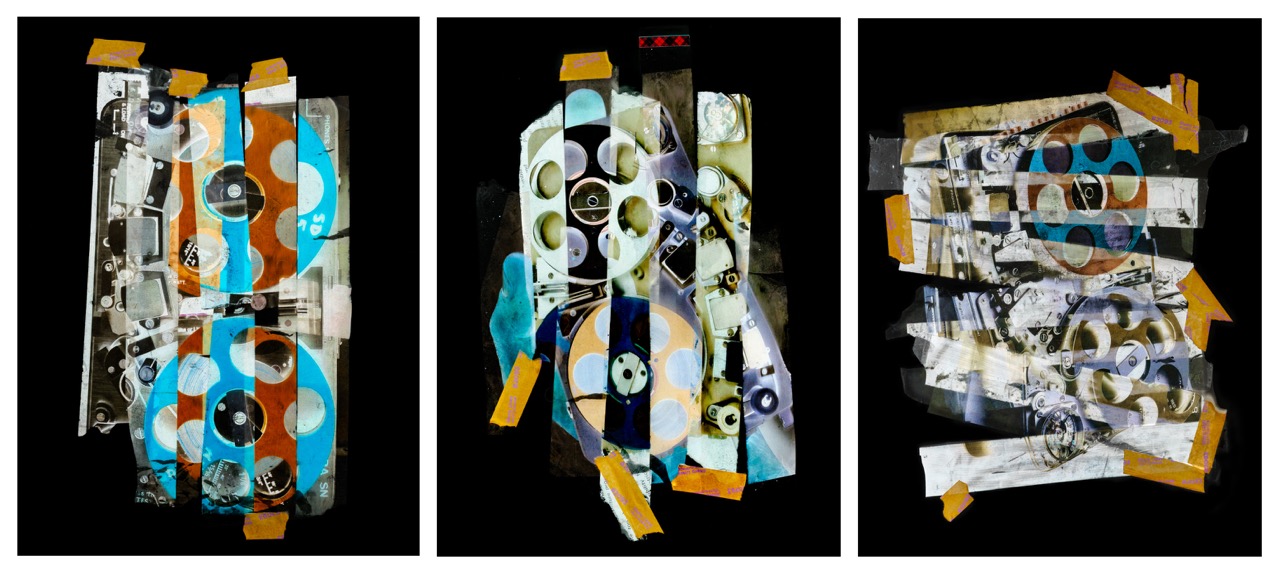
Nagraographs 2024. Digital prints on Epson Paper.
Taking a cue from Man Ray's Rayographs, named for the cameraless process by which they were made, these works propose the term Nagraograph for the transfer of images of the iconic Swiss-made Nagra SN tape recorder to tape. Each piece begins with multiple strips of sticky tape applied to photocopied images before the paper support is dissolved in warm water, leaving only photocopier toner adhered to the tape. These translucent fragments are then reassembled to construct a new series of Nagra-derived images. The Nagra SN remains a highly coveted, beautifully engineered and compact reel-to-reel machine. Small enough to be concealed, it was frequently used for clandestine operations by the CIA and other intelligence agencies. Nagraographs echo the original machine’s transformation from invisible recording device to fetishised object. The initially transparent sticky tape collapses distinctions as it becomes the object, the image, and the process. The work reflects on the dematerialisation of recording technologies and a recurring cycle: technologies disappear, but their material and cultural residues remain fertile references for unexpected futures. Nagraographs claim a lineage with Rayographs while refusing to name the process after the artist. The machine gets the name.
11. Brie Trenerry
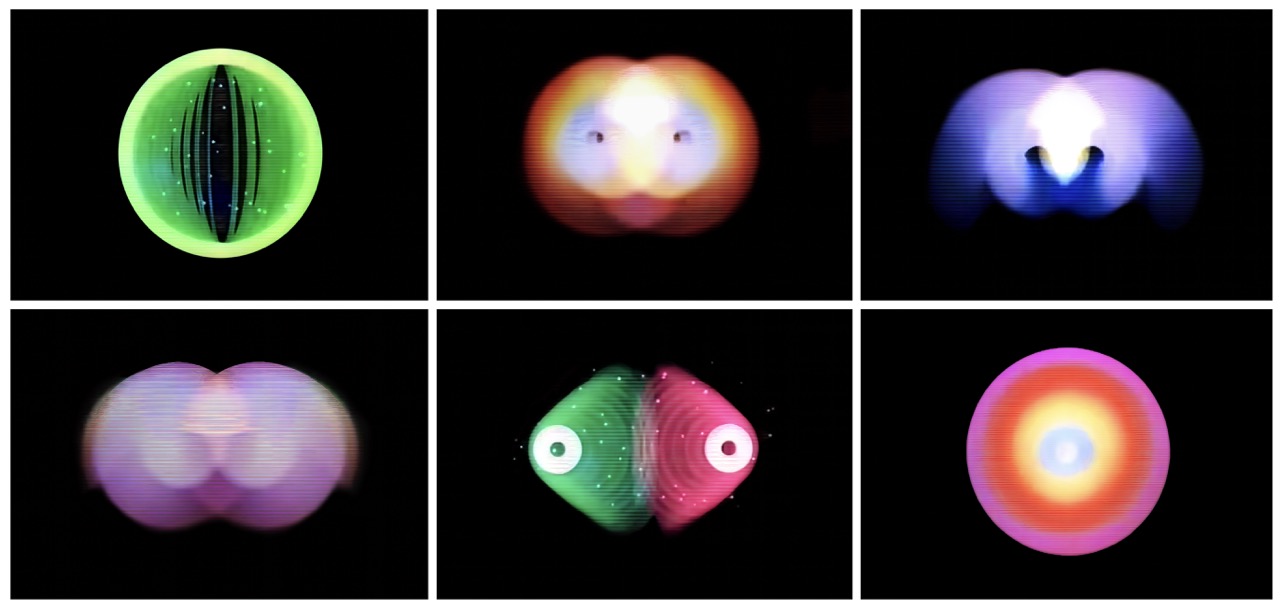
Transition, transmission 2026. Inkjet prints on Epson paper.
12. Benedict Sibley
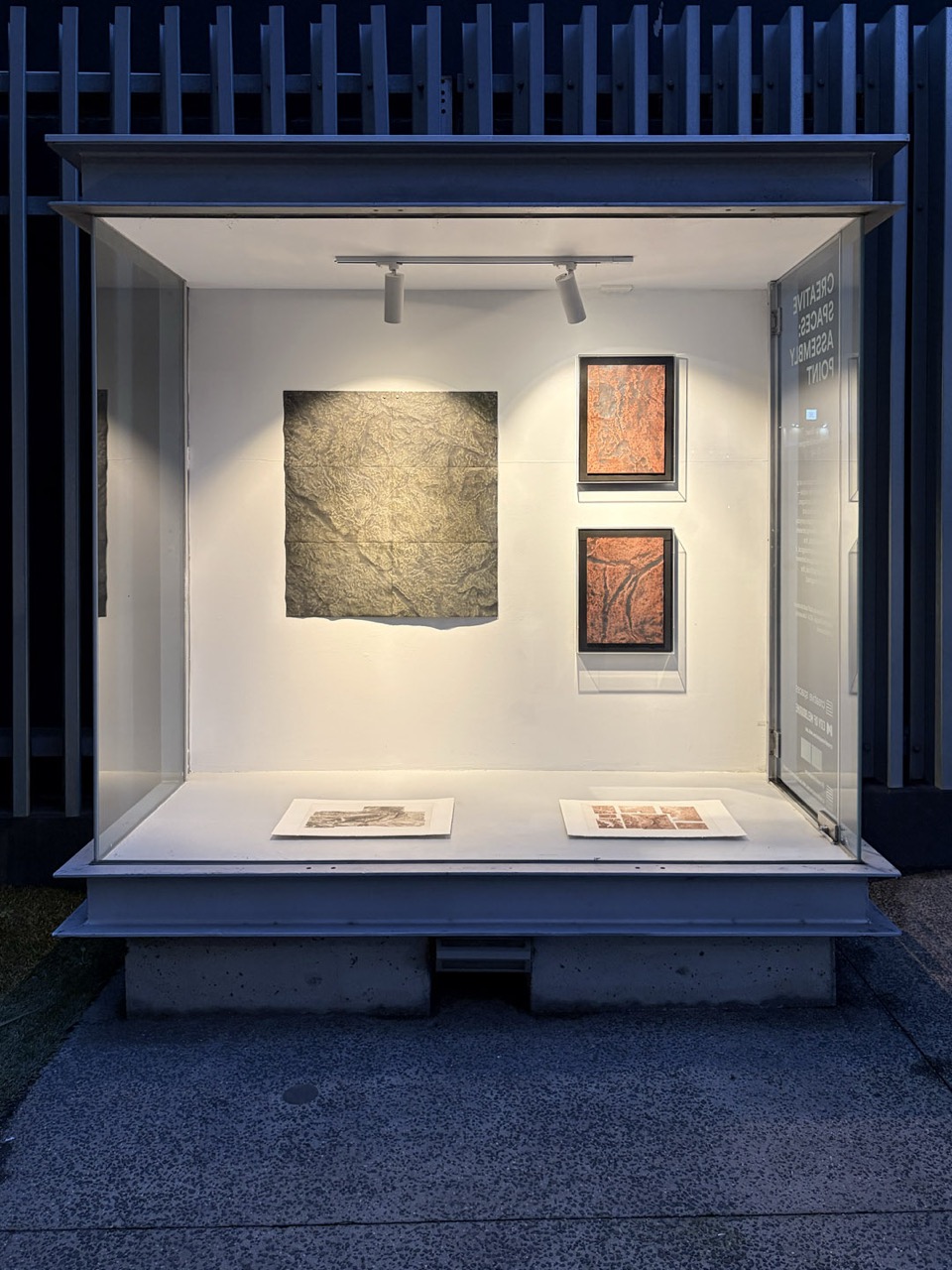
Geo-Drawings 2022-26. Ink, graphite, coloured graphite on Lana paper
Geo-Drawings commenced as a site-specific project undertaken in the Vulkathunha-Gammon Ranges in central South Australia during two residencies in 2022 and 2023. Geo-drawing is a mapping process that throws the perception of location and scale into stark relief. Numerous 1:1 scale impressions of the rock strata were made at selected sites using paper prepared with graphite and coloured ink washes, while new arial maps of the region were etched and hand printed back in Victoria using carbon-based inks. The Gammon Ranges is Adnyamathanha Country, and the Adnyamathanha People whose name translates as ‘Rock People’ have been custodians of this region longer than can be conceived of in any western timeframe. This remote region is rich with their culture, geologically extreme and highly biodiverse in its unique flora and fauna. It is a profoundly awe-inspiring location to find yourself in. As a visitor, one becomes acutely aware of one’s own relevance in relation to the palimpsest of stories told and those embedded in the landscape; the ancient land formations - of time itself. These layers of memory and history inevitably confront the psyche - meaning surrounding the present becomes somewhat questioned. As a strategy to navigate an appreciable step towards an understanding, Geo-Drawings are a way to record time, location and scale. Full documentation of the exhibition Limits, in 2024 at Yarta Purtli Cultural Centre SA, in which the Geo-Drawings were first featured, can be found at: benedictsibley.com. The Melbourne version of the exhibition Second Limits, in 2025 at Jacob Hoerner Galleries, can be seen here: jacobhoernergalleries.com
13. Craig Easton & Huang Zhejun
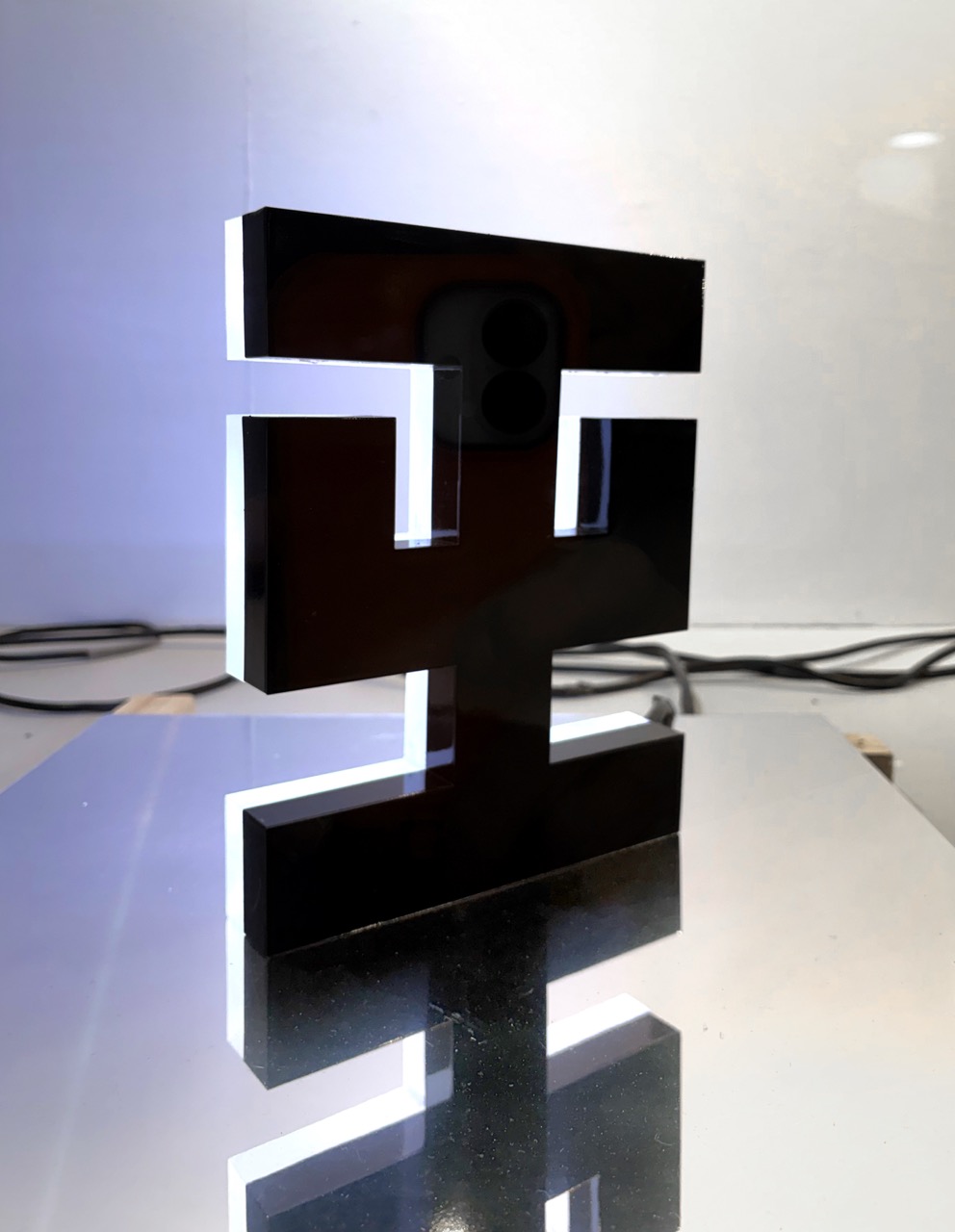
Not Quitting / Not Sticking 2026-2016. Mixed media. Various dimensions.
These works form part of an ongoing collaborative project with Shanghai artist Huang Zhejun. Utilising an expanding set of mediums including photography, video, object making and spatial practices, Not Quitting / Not Sticking shifts across time to play with the performative and formal architectures available to a calligraphic language beyond traditional brush and ink.
14. Darren Wardle and Brie Trenerry
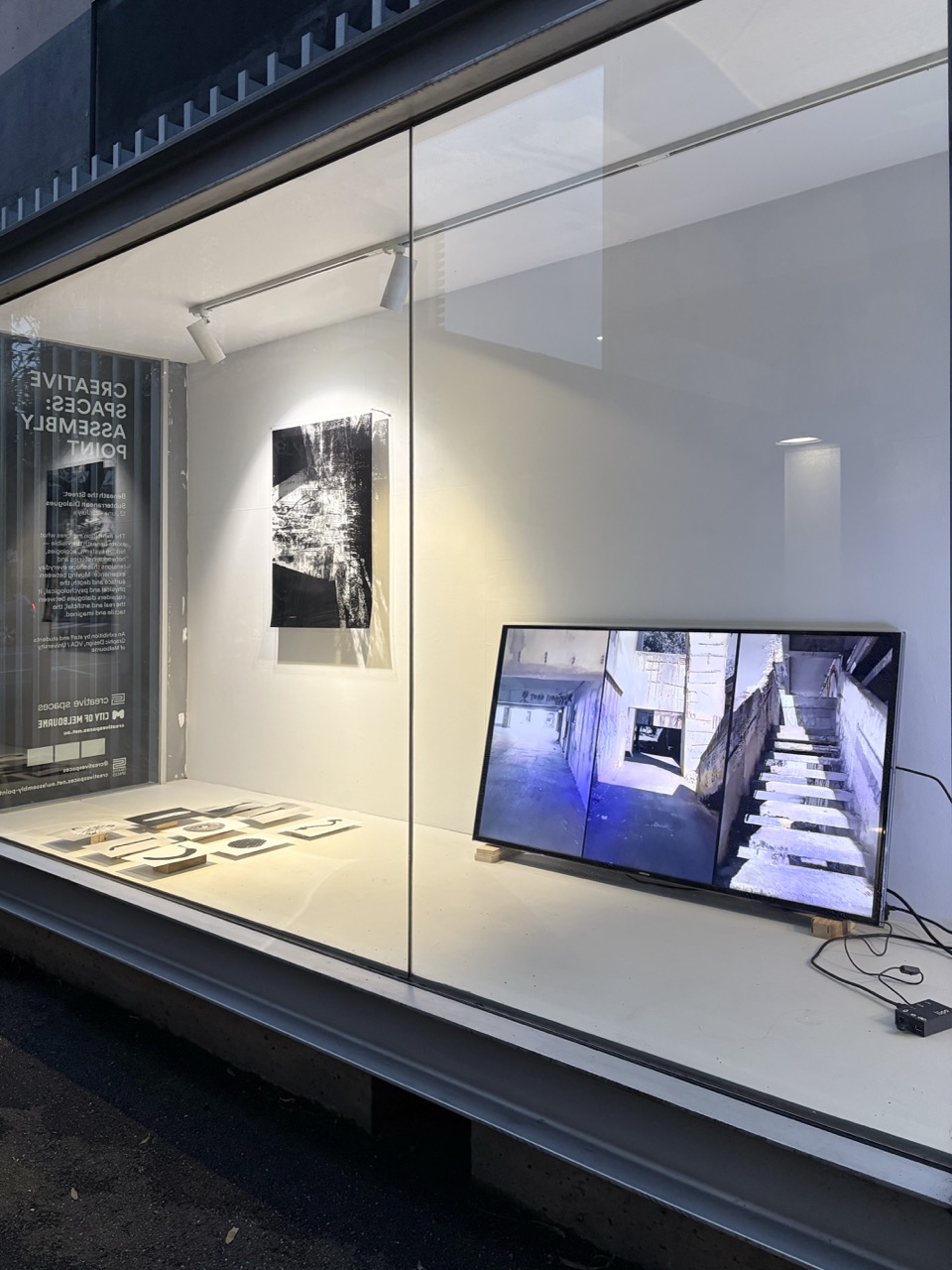
Zone d (Richter’s Rockets) 2026. MP4 digital video, 9:11 mins.
Zone d reassembles footage of three brutalist apartment towers in Zagreb, designed by Yugoslav architect Vjenceslav Richter, into a fragmented meditation on structural decay and historical transition. Filmed from a first-person perspective, the work implicates the viewer in an encounter with Socialist Modern architecture suspended between endurance and collapse. A vertical triptych echoes the proportions of the towers while drawing on the compositional traditions of painting and the labyrinthine spatial logic of Piranesi's Carceri. Through looping sequences of fractured viewpoints, deteriorating concrete, graffiti, and detritus, the work merges documentary observation with imagined projection. Its non-narrative structure discards linear time, presenting ruin as an ongoing process of transformation rather than a completed event. By arresting a fleeting moment within a cycle of decline, Zone d reflects the instability of monumental architecture and the ways history becomes materialised through the inexorable processes of decay.
15. Malte Neis & Antje Tschirner
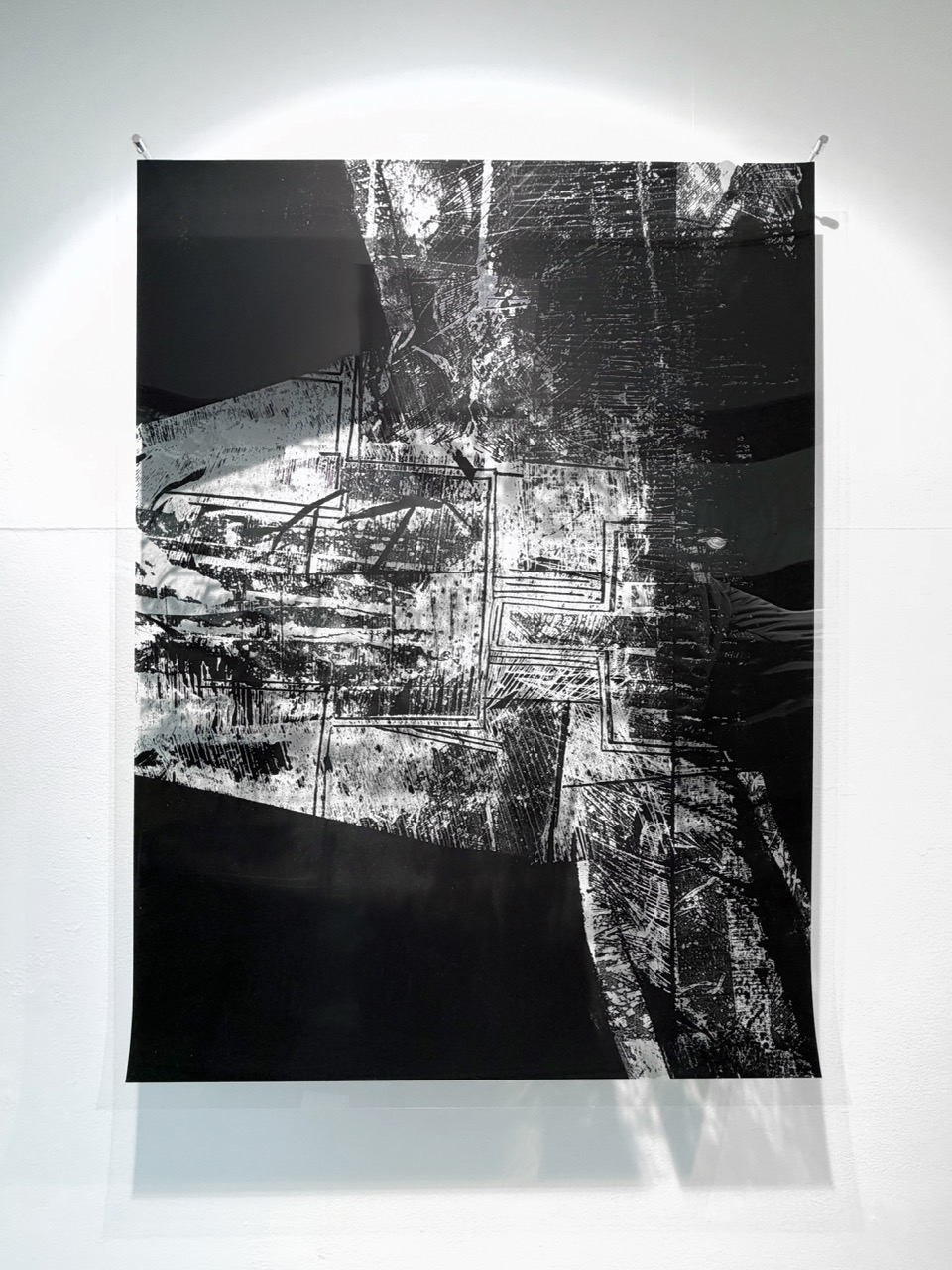
Wesenschau 2026. Mixed media. Various dimensions.
Grasping the essence is 'Wesenschau', the intuition of essence and essential structures. Through the interplay of high-contrast scratch drawings and documentary photographs of primitive objects, this exploration unfolds through the consistent filtering of the non-essential in order to reveal the archaic foundation of things.
This project takes place on the traditional Lands of the Wurundjeri Woi Wurrung and Bunurong peoples of the East Kulin Nations and we pay our respect to their Elders past, present and emerging.
Proudly supported by City of Melbourne Creative Spaces & Victorian College of the Arts, University of Melbourne
myshrine.org/BeneathTheStreet